Marcus Location: 712-376-4141
Storm Lake Location: 712-732-4343

What can we help you do?
Marcus Location: 712-376-4141
Storm Lake Location: 712-732-4343
What can we help you do?
Sunday, July 12, 2026
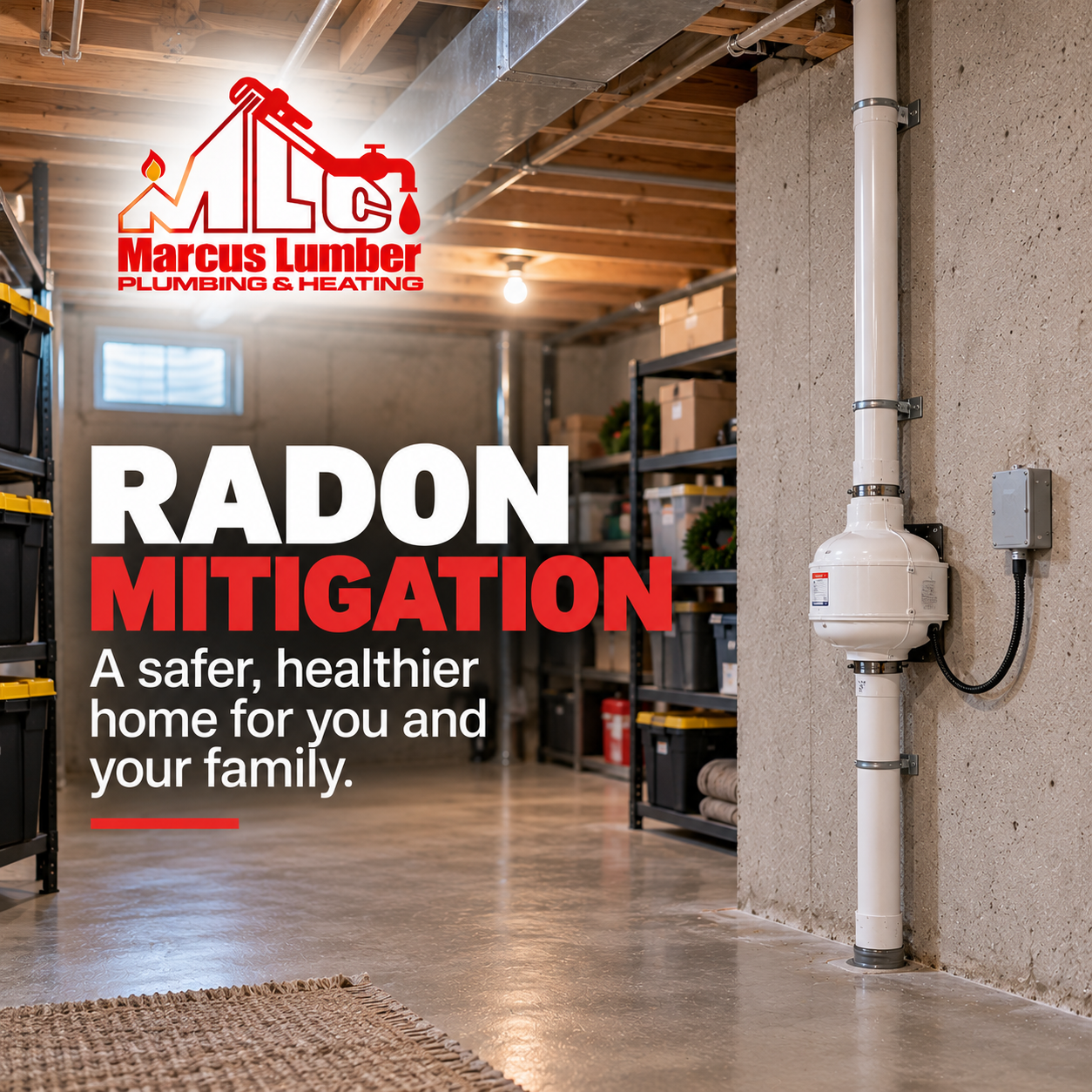
Radon is a serious concern for Iowa homeowners, but it’s also a problem that can be addressed.
Whether you’re building a new home, purchasing an existing house, or simply concerned about the air your family breathes, understanding radon testing and mitigation is an important first step.
At Marcus Lumber, we offer radon mitigation services to help homeowners throughout our Northwest Iowa service area address elevated radon levels.
And with new Iowa construction requirements taking effect in 2026, radon protection is becoming an even more important part of planning a new home.
Why Is Radon Such a Concern in Northwest Iowa?
Radon is a naturally occurring radioactive gas produced as uranium breaks down in soil and rock. It can enter homes through cracks, openings around pipes, foundation joints, and other pathways. You cannot see, smell, or taste radon. The only way to know your home’s radon level is to test. Iowa has some of the highest radon levels in the country. According to the Iowa Department of Health and Human Services, a statewide radon survey found that **71.6% of Iowa homes tested above the Environmental Protection Agency’s action level of 4 picocuries per liter (pCi/L).** The EPA classifies every county in Iowa as Zone 1, its highest radon-potential category. That includes Northwest Iowa communities such as Marcus, Cherokee, Storm Lake, Le Mars, Sioux City, and surrounding rural areas.
However, radon levels can vary considerably from one house to another. A home with elevated radon levels may be located right next to a home with much lower readings.
The bottom line: Don’t assume your home is safe simply because it’s newer, well-built, or your neighbor had a low test result.
What Is Radon Mitigation, and How Does It Work?
Radon mitigation is the process of reducing the concentration of radon gas inside a building. One of the most common solutions is a system called *active sub-slab depressurization*. This system typically uses piping and a specialized fan to draw radon-containing soil gas from beneath the home’s foundation and safely vent it outdoors, above the roofline. The goal is to prevent radon from entering the living space in the first place.
A typical system may include:
– A suction point beneath the concrete floor
– PVC piping to transport soil gases
– A specially designed radon mitigation fan
– Properly located exterior vent piping
– A system indicator to help confirm the fan is operating
The exact design depends on the home’s foundation, layout, and existing conditions. Homes with basements, crawl spaces, and slab-on-grade foundations may require different approaches.
New Iowa Radon Requirements for Homes Built After July 1, 2026
Iowa homeowners and builders should be aware of an important legislative change. In May 2026, Iowa enacted House File 2297, requiring passive radon mitigation methods in covered new single-family and two-family residential construction statewide, effective July 1, 2026. The law references Appendix AF of the 2021 International Residential Code.
What does that mean for a new home?
Passive radon-resistant construction generally involves preparing the home to reduce radon entry through measures such as a gas-permeable layer beneath the slab, appropriate sealing, and vent piping. Unlike an active mitigation system, a passive system does not rely on a continuously operating fan. If testing after construction reveals elevated radon levels, the system may need to be converted to an active system with a fan. For homeowners and contractors planning new construction in Northwest Iowa, radon protection should now be part of the conversation before concrete is poured. Marcus Lumber can help customers discuss radon mitigation considerations during the building process.
Frequently Asked Questions About Radon Mitigation in Iowa
1. What radon level is considered dangerous?
The EPA recommends taking action when a home’s confirmed radon level is 4 pCi/L or higher. Homeowners should also consider reducing radon levels between 2 and 4 pCi/L because no level of radon exposure is considered completely risk-free.
2. Does every home in Iowa have radon?
Radon is naturally present in the environment, but indoor levels vary. Iowa has a particularly high potential for elevated radon, making testing important for every home.
3. Is radon a problem in Northwest Iowa?
Yes. All Northwest Iowa counties are within EPA Radon Zone 1. Elevated levels are possible in homes throughout Cherokee, Buena Vista, Plymouth, Woodbury, Sioux, O’Brien, and surrounding counties.
4. How do I know if my house has radon?
You need a radon test. Testing can be performed using an approved short-term or long-term testing device or through a certified radon measurement specialist.
5. How much does radon mitigation cost in Iowa?
Costs vary depending on the home’s size, foundation type, number of suction points required, vent routing, and installation complexity. A professional evaluation is the best way to determine the appropriate system and cost for your home.
6. Does radon mitigation actually work?
Yes. Properly designed and installed radon mitigation systems can significantly reduce indoor radon concentrations. Post-installation testing is necessary to confirm that the system is working effectively.
7. How long does radon mitigation installation take?
Many straightforward residential systems can be installed in approximately one day, although more complicated foundations and larger homes may require additional time.
8. Do radon mitigation fans run all the time?
Yes. Active radon mitigation fans are designed to operate continuously. Turning off the fan can allow radon levels to rise again.
9. Is a radon mitigation system noisy?
Most properly installed systems operate relatively quietly. Fan placement, vibration isolation, and piping design can influence noise levels.
10. Can radon enter a home without a basement?
Absolutely. Radon can enter through slab-on-grade foundations and crawl spaces, as well as basements. Homes without basements should still be tested.
11. Can a newly built house have high radon levels?
Yes. New construction does not guarantee low radon levels. Even homes built with passive radon-resistant features should be tested after construction.
12. Does Iowa require radon mitigation in new homes?
Beginning July 1, 2026, Iowa requires passive radon mitigation methods in covered new single-family and two-family residential construction. This does not automatically require an active fan in every new home.
13. Does Iowa require existing homes to have radon mitigation?
No. The 2026 statewide new-construction requirement does not generally require owners of existing homes to install a radon mitigation system. However, mitigation is recommended when testing confirms elevated levels.
14. Is radon testing required when selling a house in Iowa?
Iowa does not have a general statewide requirement that every home be tested or mitigated as part of a sale. Sellers must disclose known radon test information and provide the required Iowa radon fact sheet to buyers. Buyers may request radon testing as part of their inspection process.
15. Should I test for radon before buying a home?
Yes. Radon testing is a sensible part of evaluating a home purchase, especially in Iowa, where elevated radon levels are common.
16. Do I need to test my house after installing a mitigation system?
Yes. Post-mitigation testing verifies that the system has successfully reduced radon levels. EPA guidance recommends testing no sooner than 24 hours and within 30 days after system activation.
17. Will sealing cracks in my basement eliminate radon?
Sealing cracks and openings may help, but sealing alone is generally not a reliable solution for elevated radon levels. Active sub-slab depressurization is a commonly used and effective mitigation method.
18. Is radon worse in the winter in Iowa?
Radon levels can fluctuate seasonally. Winter heating, closed windows, and pressure differences between indoor air and the soil may contribute to elevated concentrations. Testing over a longer period can provide a more representative picture of exposure.
19. Can radon affect my family’s health?
Yes. Long-term exposure to elevated radon increases the risk of lung cancer. The EPA identifies radon as the leading cause of lung cancer among nonsmokers. Smoking combined with radon exposure substantially increases the risk.
20. Who can install a radon mitigation system in Northwest Iowa?
Iowa requires radon mitigation specialists performing work for compensation to be appropriately credentialed. Marcus Lumber offers radon mitigation services for homeowners in its Northwest Iowa service area. Contact our team to discuss your home, testing results, and available installation options.
Local Radon Mitigation Services From Marcus Lumber
Marcus Lumber has served Northwest Iowa since 1920. In addition to supplying building materials, our company offers services through our Plumbing, Heating, and Field Services team, including radon mitigation.
Whether you’re concerned about a high radon test result in an existing home or planning radon protection for new construction, we’re here to help you explore your options.
**Have questions about radon mitigation? Contact Us**
*Information updated October 2026. Building requirements and local permitting procedures may change. Consult the applicable building authority and an Iowa-credentialed radon professional for project-specific requirements.*